5-Axis CV Robotic Arm
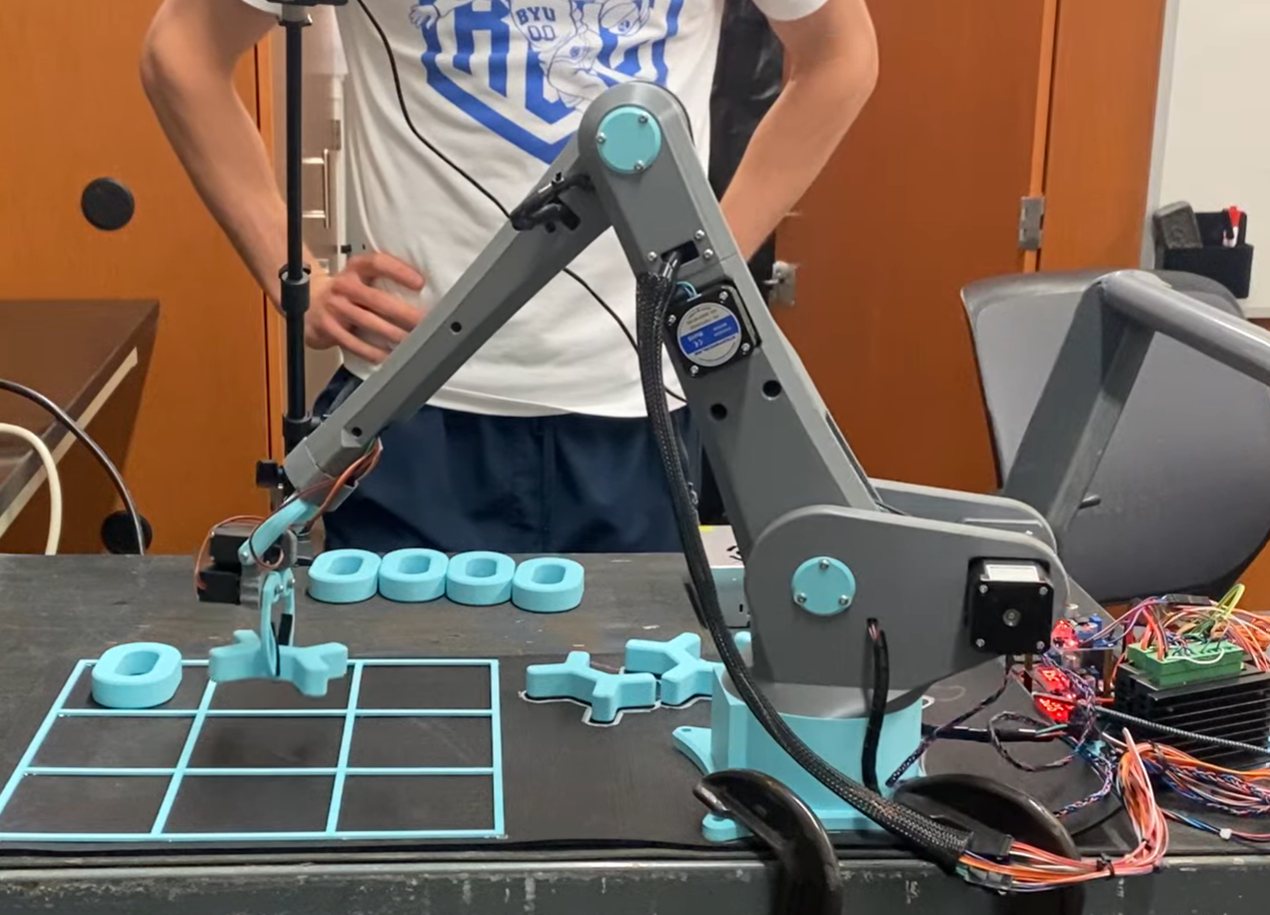
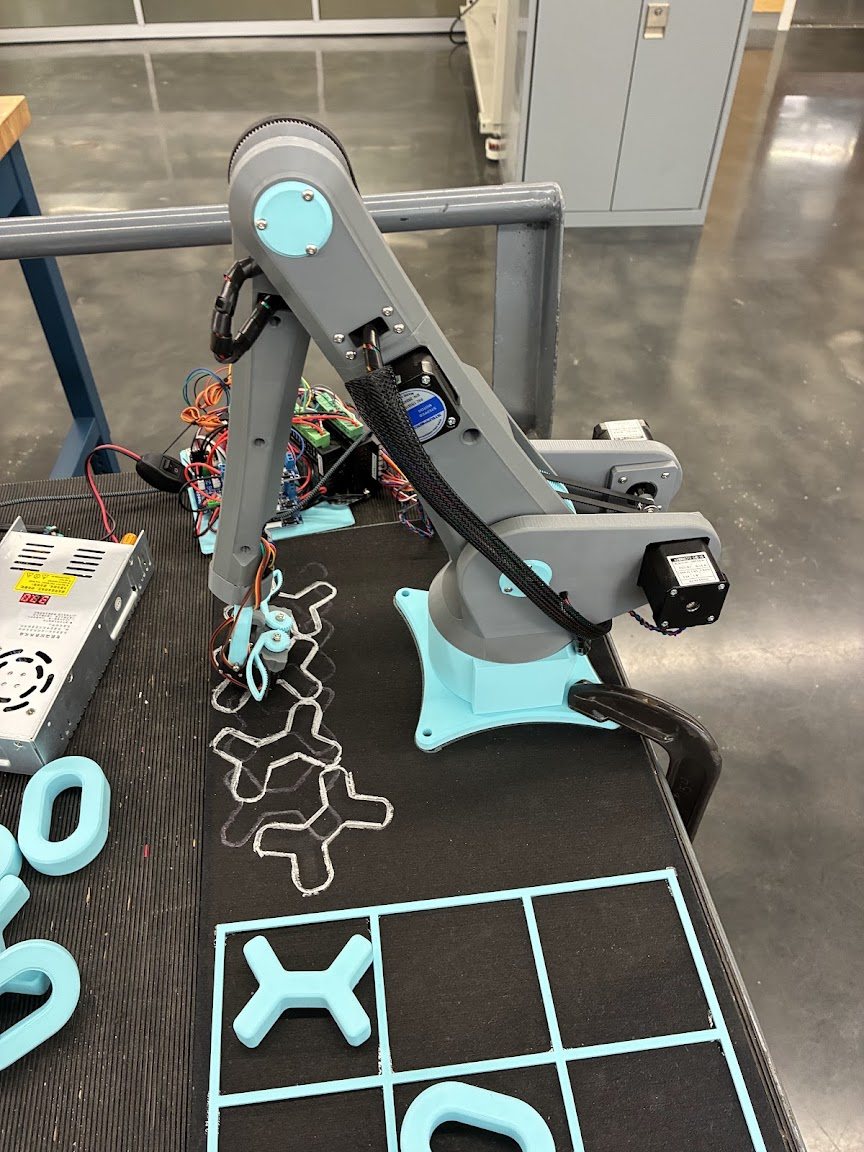
I designed, prototyped, and programmed a 5-axis robotic arm that plays tic-tac-to with a real user using computer vision controls.
Design
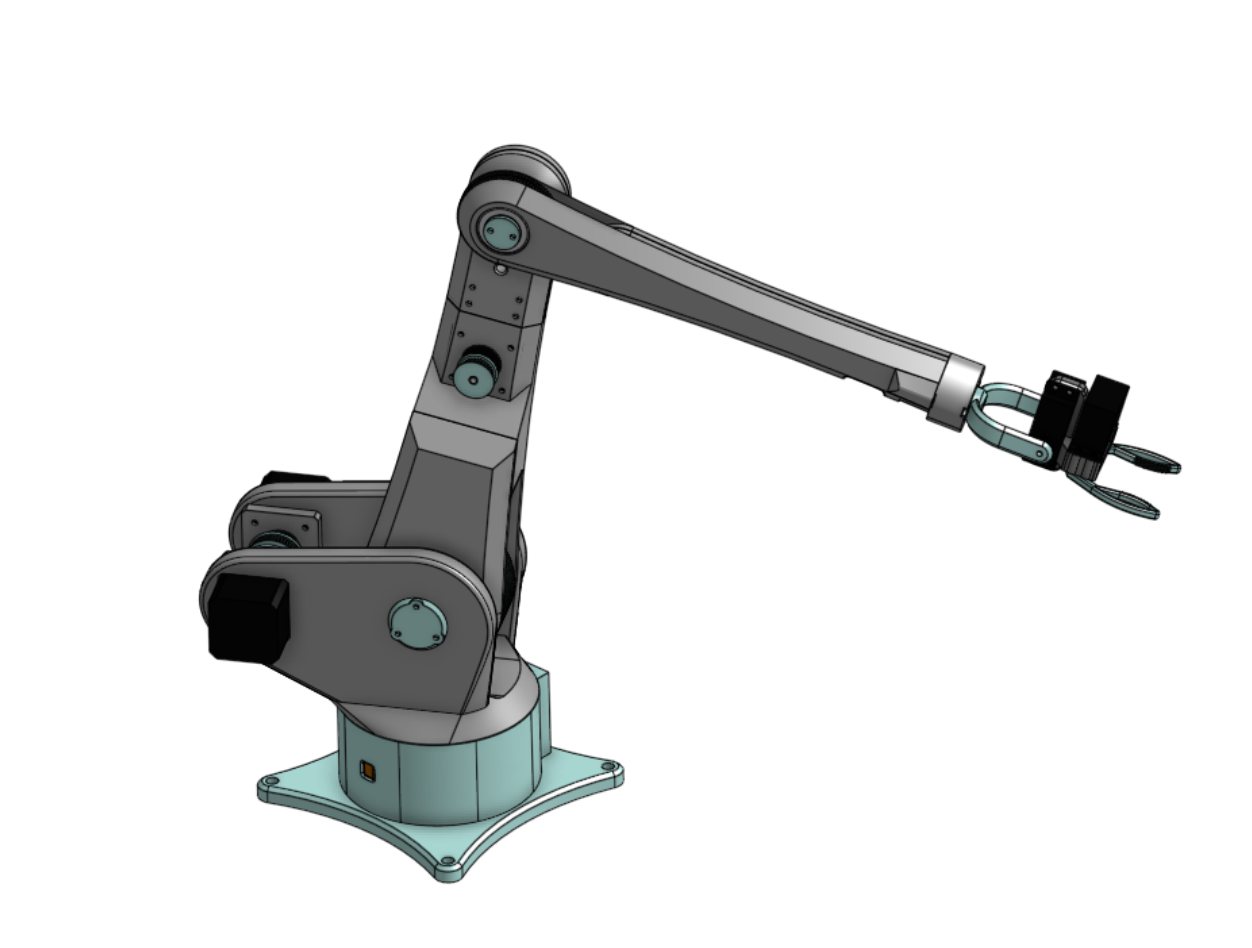
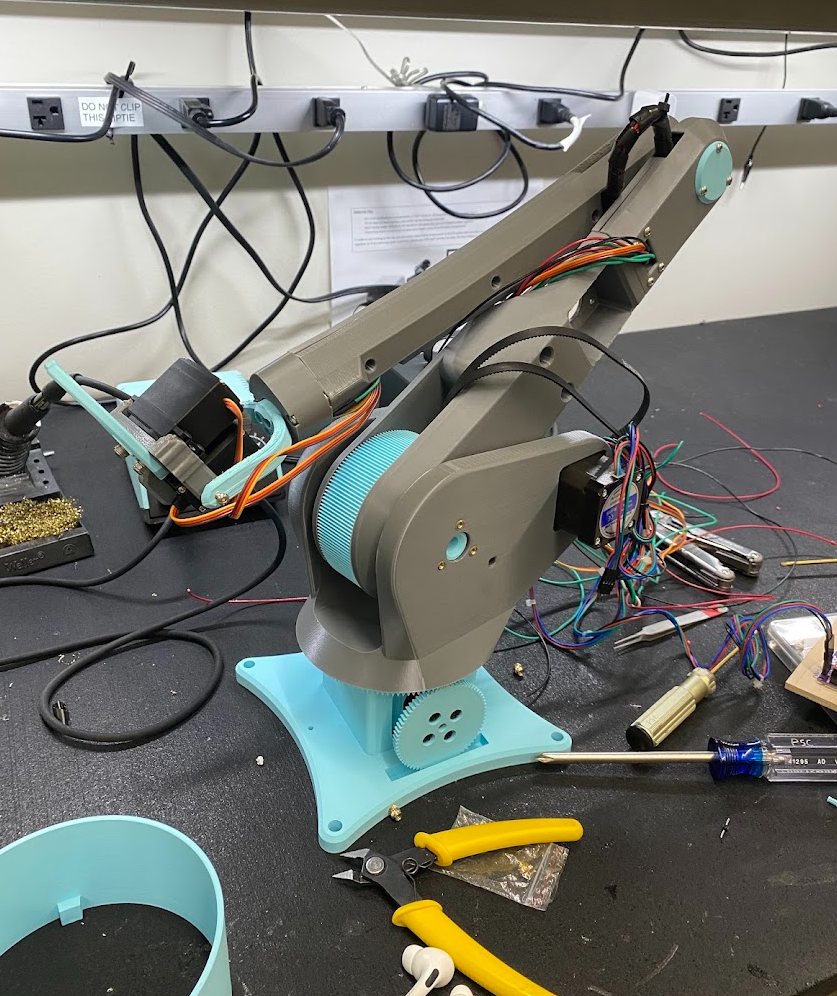
I began with a static analysis to find the required structural and power specifications to perform the desired task. I modeled all parts parametrically in Onshape to allow for fast iteration. I integrated the motors, sensors, and hardware into the body using imported parts. I printed and assembled the frame, installed the motors and hall effect sensors, and connected it all to the electronics board for commands and power.
Electronics
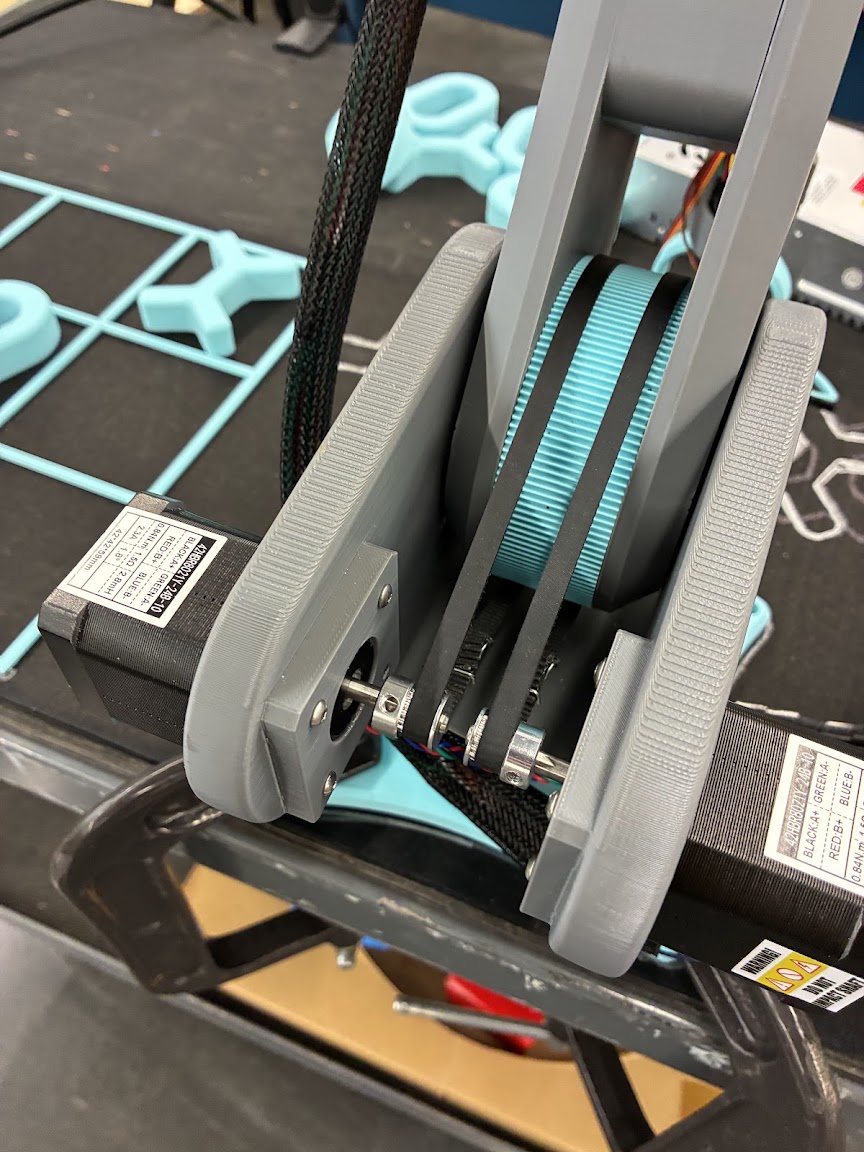
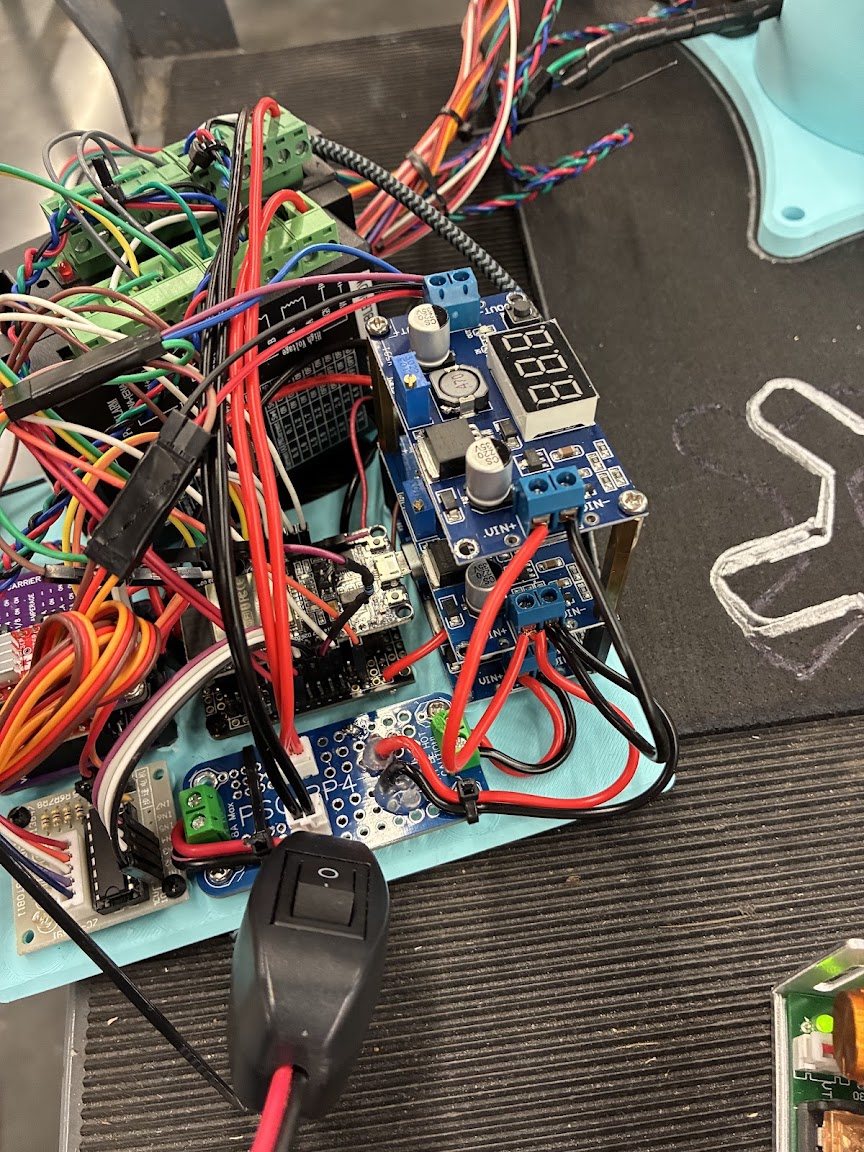
The arm includes 5 stepper motors and 2 servo motors. Their drivers are attached to the electronics board at the base of the system. A power supply sources the 40 volts required for operation. I connected an ESP32 to the motor drivers and hall effect sensors to handle feedback processing and actuation commands. 3 variable regulators step down the voltage to 5V and 3.3V for the logic level power and the sensors.
Programming
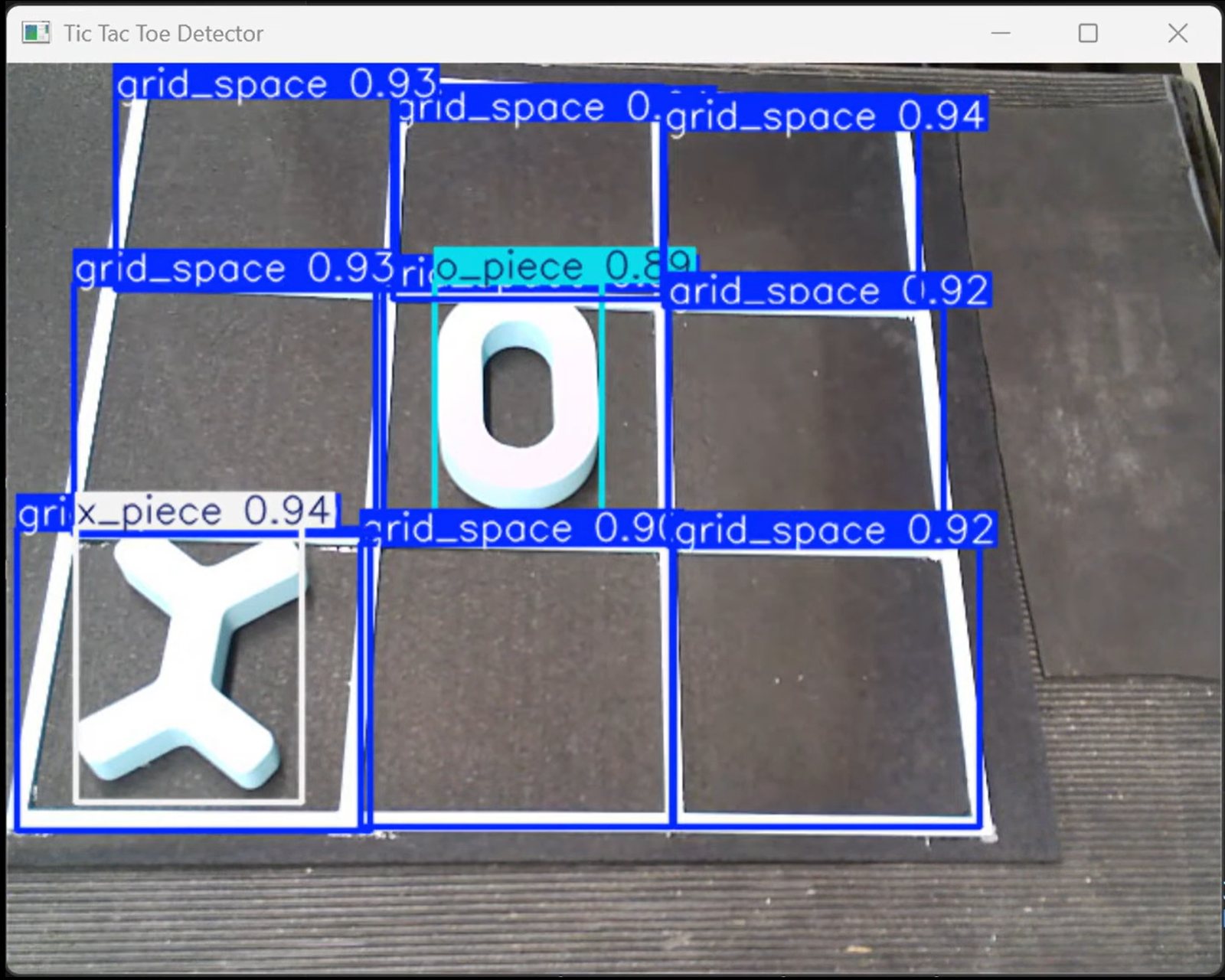
I trained a computer vision model to recognize the game pieces and the board, and ran it with OpenCV in a Python script. OpenCV library features convert the camera feed into an accurate board state. That state goes through a tic-tac-to logic sequence to find the optimal move. The move is sent to the ESP32, which drives the arm. I used AI to guide me through the computer vision software development.